
Woo’s Wisdom: Clinical Insights from the Woo U Community
At Woo U, we believe that continuing education is more than simply learning new information—it’s about gaining practical knowledge that can be applied directly to patient care.
Our Woo’s Wisdom series highlights key clinical insights, practical pearls, and takeaways from our expert faculty. Here are highlights from several recent sessions covering serum tears, neuro-ocular surface disease, and lens-based vision correction surgery.
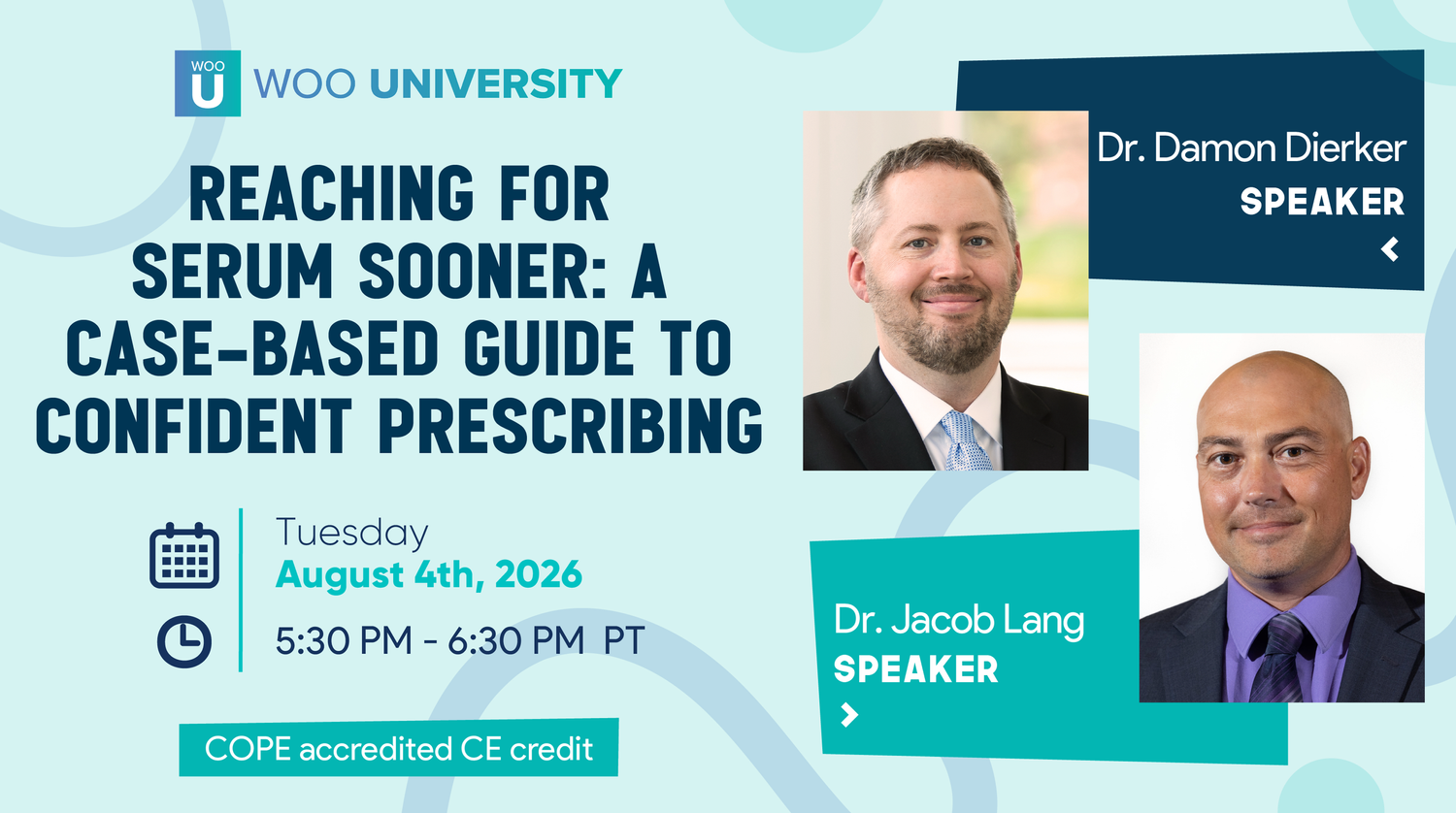
Reaching for Serum Sooner: A Case-Based Guide to Confident Prescribing
Reaching for Serum Sooner: A Case-Based Guide to Confident Prescribing
Here is the Woo’s Wisdom for “Reaching for Serum Sooner: A Case-Based Guide to Confident Prescribing” with Dr. Damon Dierker and Dr. Jacob Lang.
They first discussed the pathophysiology of dry eye disease, including tear film instability, inflammation, hyperosmolarity and neurosensory abnormalities. They also went into detail about the different types of dry eye.
Then they discussed, what are serum tears?
They are preservative free biologic eye drops prepared from the patient’s own blood serum- a personalized tear substitute that closely mirrors natural tear composition.
What makes them different from artificial tears? AT’s provide passive lubrication, while serum tears provide active biologic support, including delivering growth factors, proteins and vitamins that the ocular system cannot generate on its own.
Who can benefit from serum tears? Patients with persistent staining, recurrent epithelial breakdown, moderate to severe aqueous deficiency, Sjogren’s/autoimmune disease, neurotrophic risk and post surgical or preservative intolerance.
They also discussed four clinical cases where serum tears were prescribed and the clinical outcomes.
One of their top clinical pearls? Autologous serum tears are not “one size fits all”. Concentration and dosing should be individualized based on disease severity, patient adherence and treatment goals.
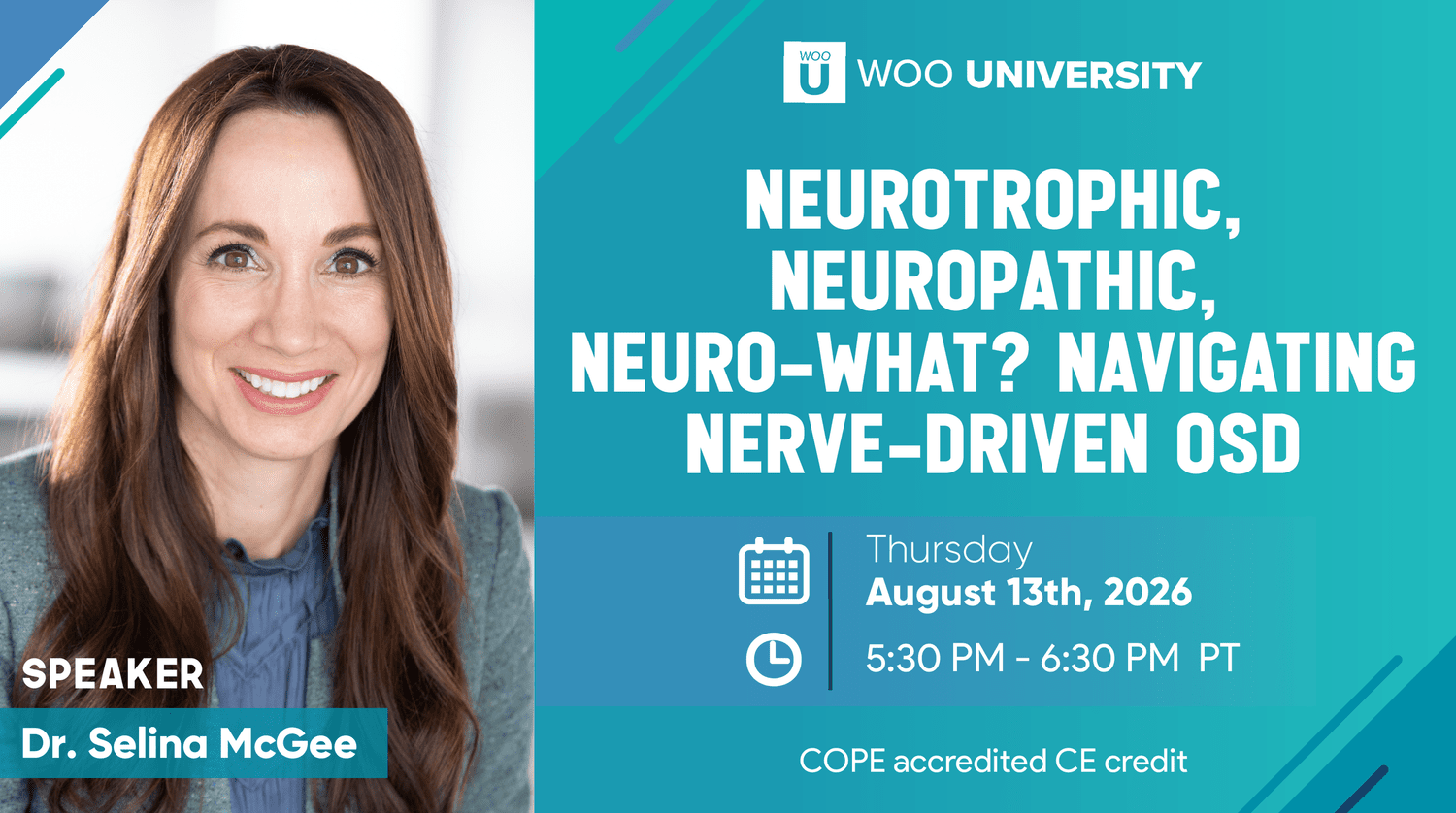
Neurotrophic, Neuropathic, Neuro- What?
Neurotrophic, Neuropathic, Neuro- What?
Here is the Woo’s Wisdom for “Neurotrophic, Neuropathic, Neuro- What?” with Dr. Selina McGee.
She started by asking, how do we miss these patients, and the limitations of using the tear-film only approach. She then discussed that the cornea is not a passive surface, including the blink reflex reflex tearing and epithelial maintenance.
She reminded us that the cornea is the most densely innervated surface in the body, there is a spectrum of nerve- driven disease and how nerve dysfunction disrupts the ocular surface.
She then discussed neurotrophic keratitis and neuropathic pain, including etiology, history and questionnaires, clinical presentation, evaluating, diagnostic tools, staging, treatment and management, and associated systemic conditions.
Lastly, she spoke about putting it together - including practice clinical decision making and building a diagnostic algorithm.
She finished with her “AKASH Method” to help with clinical diagnosis and treatment, which is awareness, knowledge, application, skill, and habit.
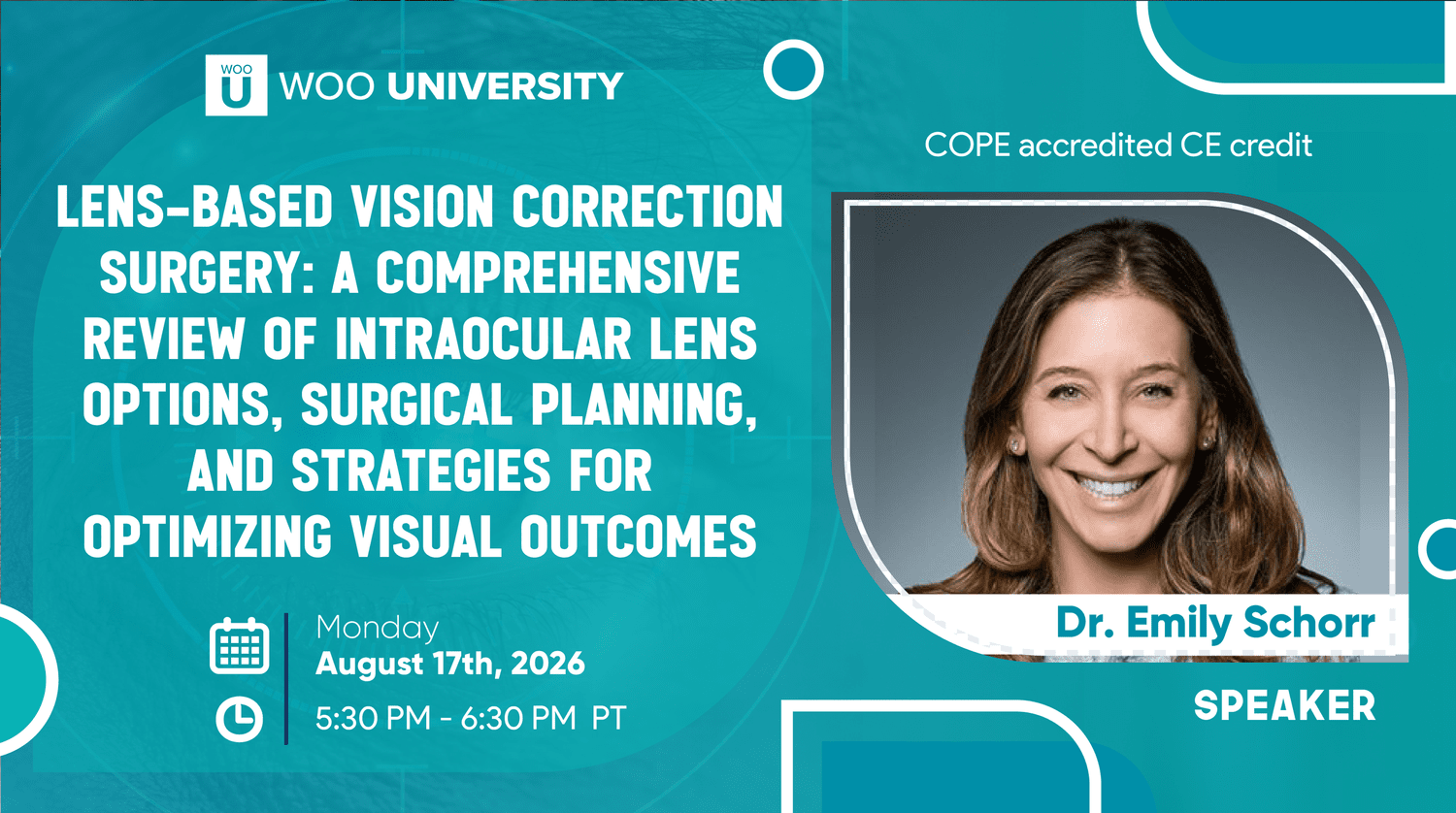
Lens-Based Vision Correction Surgery: A Comprehensive Review of Intraocular Lens Options, Surgical Planning, and Strategies for Optimizing Visual Outcomes
Lens-Based Vision Correction Surgery: A Comprehensive Review of Intraocular Lens Options, Surgical Planning, and Strategies for Optimizing Visual Outcomes
Here is the Woo’s Wisdom for “Lens Based Vision Correction Surgery: A Comprehensive Review of Intraocular Lens Options, Surgical Planning, and Strategies for Optimizing Visual Outcomes” with Dr Emily Schorr.
She started by discussing who is a good candidate for laser based surgery, setting proper expectations using proper diagnostics and measurements required before surgery. She also discussed lens options, including optical mechanisms, clinical outcomes data, dysphotopsia profiles, spherical aberration strategies, and choosing the right options for our patients.
She also touched on the ideal solution for presbyopes, including a full range of vision, optical quality, patient tolerance, refractive correction, adjustability, predictive outcomes and minimal dysphotopsia.
She finished up with post op care and principles following surgery.
Continuing to Learn, Apply, and Improve
From individualized approaches to serum tears, to recognizing nerve-driven ocular surface disease, to making thoughtful decisions around lens-based vision correction, these sessions highlight the importance of looking beyond a single diagnosis or treatment approach.
The goal of continuing education is not simply to learn more—it’s to become more confident in recognizing clinical patterns, making informed decisions, and applying that knowledge to real-world patient care.
Thank you to Dr. Damon Dierker, Dr. Jacob Lang, Dr. Selina McGee, and Dr. Emily Schorr for sharing your wisdom with the Woo U community!
And thank you to everyone in the Woo U community who continues to learn, ask questions, and bring that knowledge back to their patients.
