
Managing Ocular Disease with Oral Medications: Expert Insights from Woo U
Attending continuing education sessions is always an opportunity to deepen clinical understanding and refine patient care strategies.
Oral medications play an increasingly important role in modern eye care, bridging the gap between localized treatment and systemic management. In this collection of Woo’s Wisdom sessions, expert clinicians share practical insights, clinical frameworks, and real-world cases that highlight how and when oral therapies can elevate patient outcomes. From pain management and opioid considerations to the expanding role of oral medications in ocular disease, these discussions provide valuable guidance for navigating complex prescribing decisions with confidence and care.
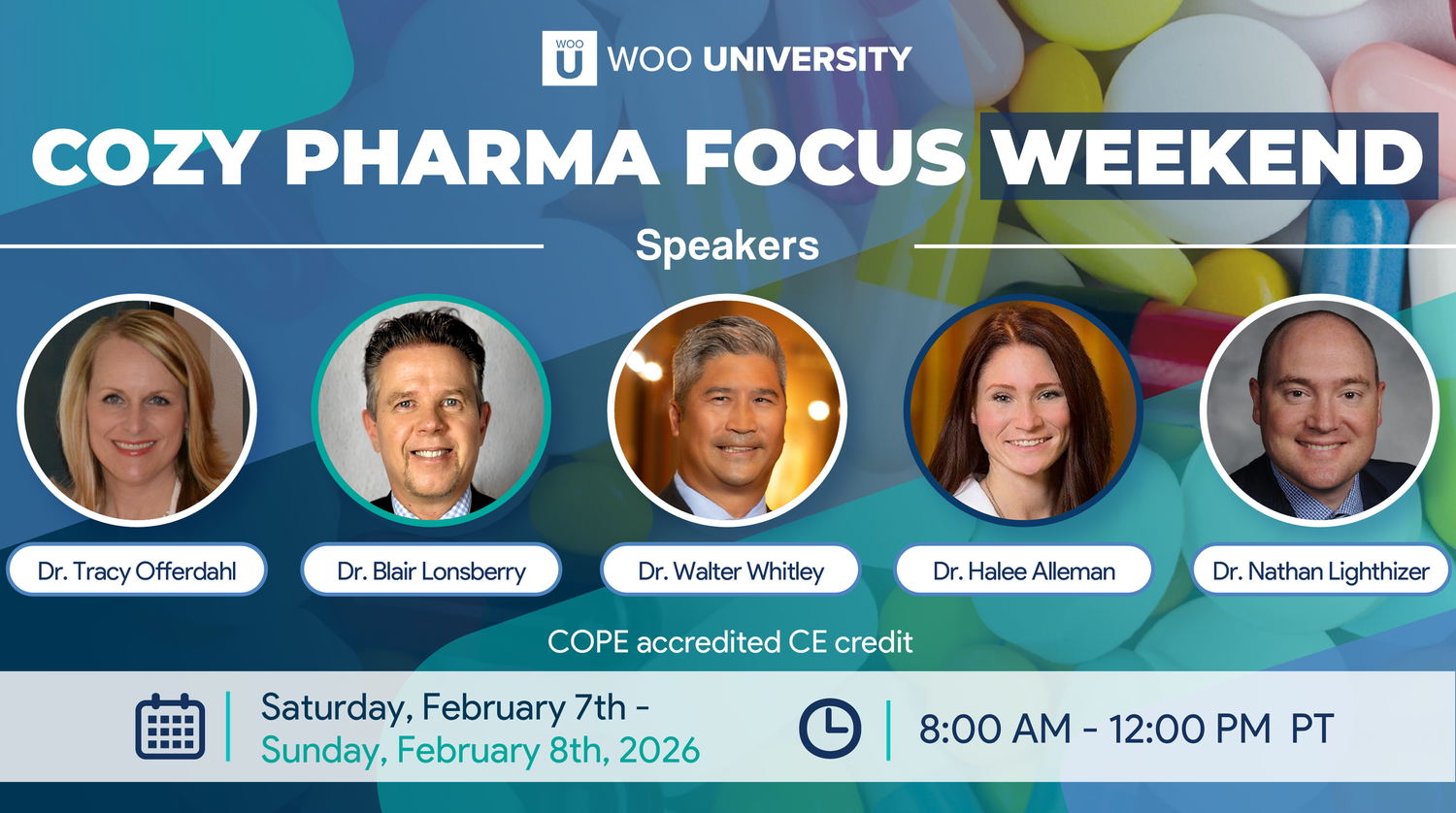
Treatment of Pain: Opioid Choices and Issues for Patient and Practitioner with Dr. Tracy Offerdahl
She discussed the four major types of pain including treatment options and goals of pain management, including mechanisms of action, allergic reactions and potential for abuse. She also spoke about analgesic use in pregnancy as well as prescribing specific medications using the numeric pain scale. She also touched on tolerance, interactions, opioid risk factors for addiction as well as opioid antagonists, signs of an overdose, identifying behaviors of abuse and addiction.
When Drops Won’t Do It: Oral Meds in Eyecare with Dr. Blair Lonsberry
He discussed commonly prescribed oral medications, including oral antivirals, NSAIDs, Cox-2 inhibitors, analgesics, gabapentin, opioids, antibiotics, tetracyclines
He spoke about mechanisms of actions, conditions treated, risks, allergies and side effects with these medications.
He also went through case presentations, including herpes simplex, acne rosacea, preseptal cellulitis, MGD, herpes zoster
Oral Pharmaceuticals in Ocular Disease with Dr. Nathan Lighthizer
He started off by discussing the oral antibiotic paradigm and how best to prevent resistance.
He then spoke about oral antibiotics (penicillins, cephalosporins, macrolides, fluroquinolones and sulfa medications), oral antivirals and other oral medications commonly seen in practice.
He also presented cases, including HZO vs HSK, eyelid abscess vs preseptal cellulitis vs orbital cellulitis and EKC.
The Good, The Bad and The Orals with Dr. Halee Alleman and Dr. Walt Whitley.
They spoke about prescribing considerations for oral medications, including indications, brand vs generic, insurance coverage, cost and compliance. They also discussed prescribing for women and pregnancy, kids, as well as for preseptal cellulitis, HZO, contact dermatitis and glaucoma. They talk about oral antibiotics, anti-fungal, steroids, analgesics, aspirin, and Plaquenil, and shared cases for each.
They also discussed the ocular side effects of systemic medications such as Plaquenil, antidepressants, thyroid medications, as well as home remedies and herbal/nutritional supplements.
Together, these Woo’s Wisdom sessions reinforce the importance of thoughtful, informed prescribing in eye care. Whether managing pain, treating infection, or addressing inflammatory conditions, oral medications require careful consideration of efficacy, safety, and patient-specific factors. Through shared expertise and case-based learning, the Woo U community continues to strengthen its clinical approach—ultimately improving patient care and outcomes.
To dive deeper into these discussions and watch the full presentations, be sure to visit our YouTube channel for the complete recordings.
