
Woo’s Wisdom: Advancing Eye Care Through Oculomics and Myopia Control
The latest Woo’s Wisdom sessions brought together valuable insights on the future of eye care, systemic health, and myopia management. Featuring presentations from Dr. Joseph Pizzimenti and Dr. Mark Bullimore, these discussions highlighted how advancing research and clinical strategies continue to shape better patient outcomes.

Oculomics: Using Retinal Biomarkers to Bridge Eye Care and Systemic Wellness with Dr. Joseph Pizzimenti
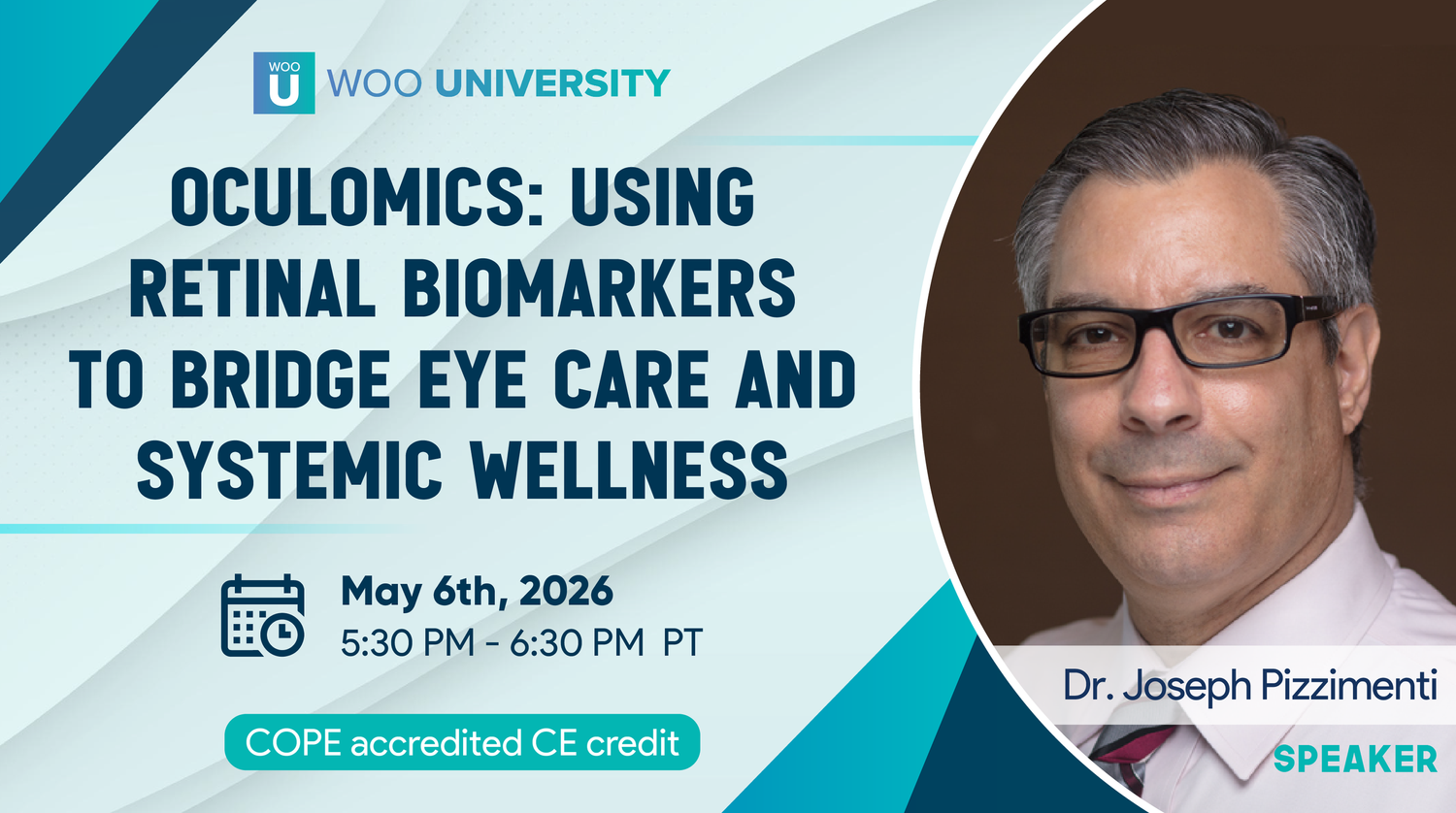
Dr. Joseph Pizzimenti first answered the question, what is oculomics?
It is the study of the eye as a “window into overall health” and examines the association between ophthalmic biomarkers and systemic health versus disease.
Throughout the session, he discussed current clinically relevant information about oculomics and biomarkers, as well as biomarkers of several ocular diseases. He also described ocular biomarkers of systemic diseases, including cardiology, neurodegenerative and kidney disease.
Dr. Pizzimenti also spoke about current concepts and evidence in oculomics, including the progress that has been made, current challenges and upcoming research. His presentation emphasized the growing role of retinal biomarkers in bridging eye care and systemic wellness, reinforcing the importance of interdisciplinary understanding in modern healthcare.
Myopia Control – Why Each Diopter Matters with Dr. Mark Bullimore
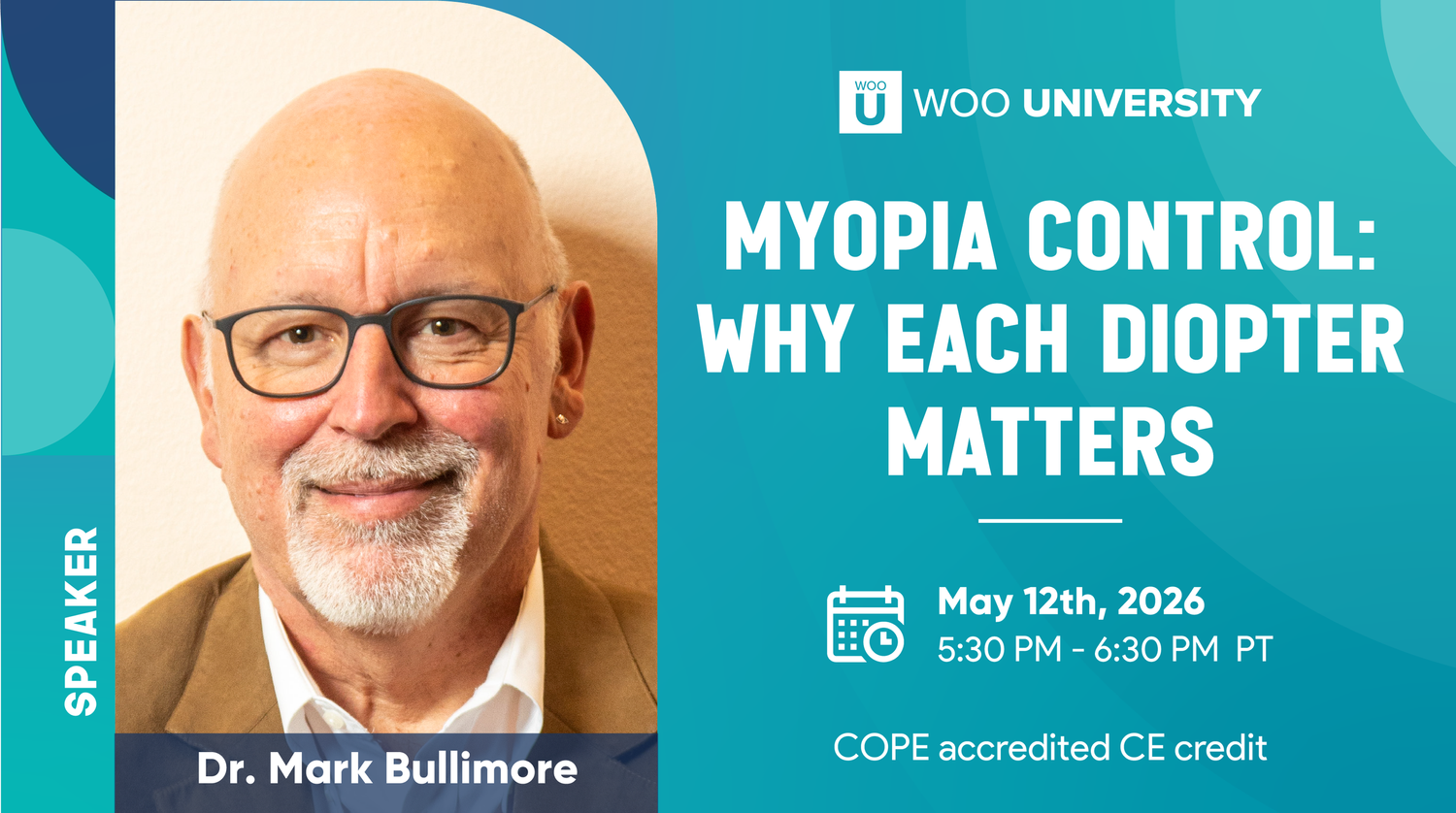
Dr. Mark Bullimore started by talking about three long term benefits of lowering a younger patient’s level of myopia, including better vision, better options and outcomes from surgical correction, and reduced risks of visual impairment (including glaucoma, myopic maculopathy and retinal impairment). He also discussed the short- and long-term benefits of myopia management.
He spoke about normal myopia progression, which is dependent on age and ethnicity. However, age of onset does not influence progression rate. He also described myopia control efficacy, which includes outcome variables (axial length, refractive error) and how to define efficacy, including reduction of axial elongation.
The session also explored how we can slow myopia progression, including spectacle lenses, contact lenses, atropine and red light therapy. Dr Bullimore finished by discussing which treatment is best, how compliance is key, and the importance of outdoor time.
His presentation reinforced the importance of early intervention and evidence-based management strategies in reducing long-term risks associated with myopia progression.
These Woo’s Wisdom sessions continue to provide valuable education and insight into the evolving field of eye care. From understanding how retinal biomarkers can reveal systemic health conditions to exploring effective strategies for myopia control, both presentations highlighted the importance of innovation, research, and patient-centered care.
We look forward to more inspiring discussions and educational opportunities with the Woo U community as we continue advancing knowledge and improving outcomes in vision and overall health.
