
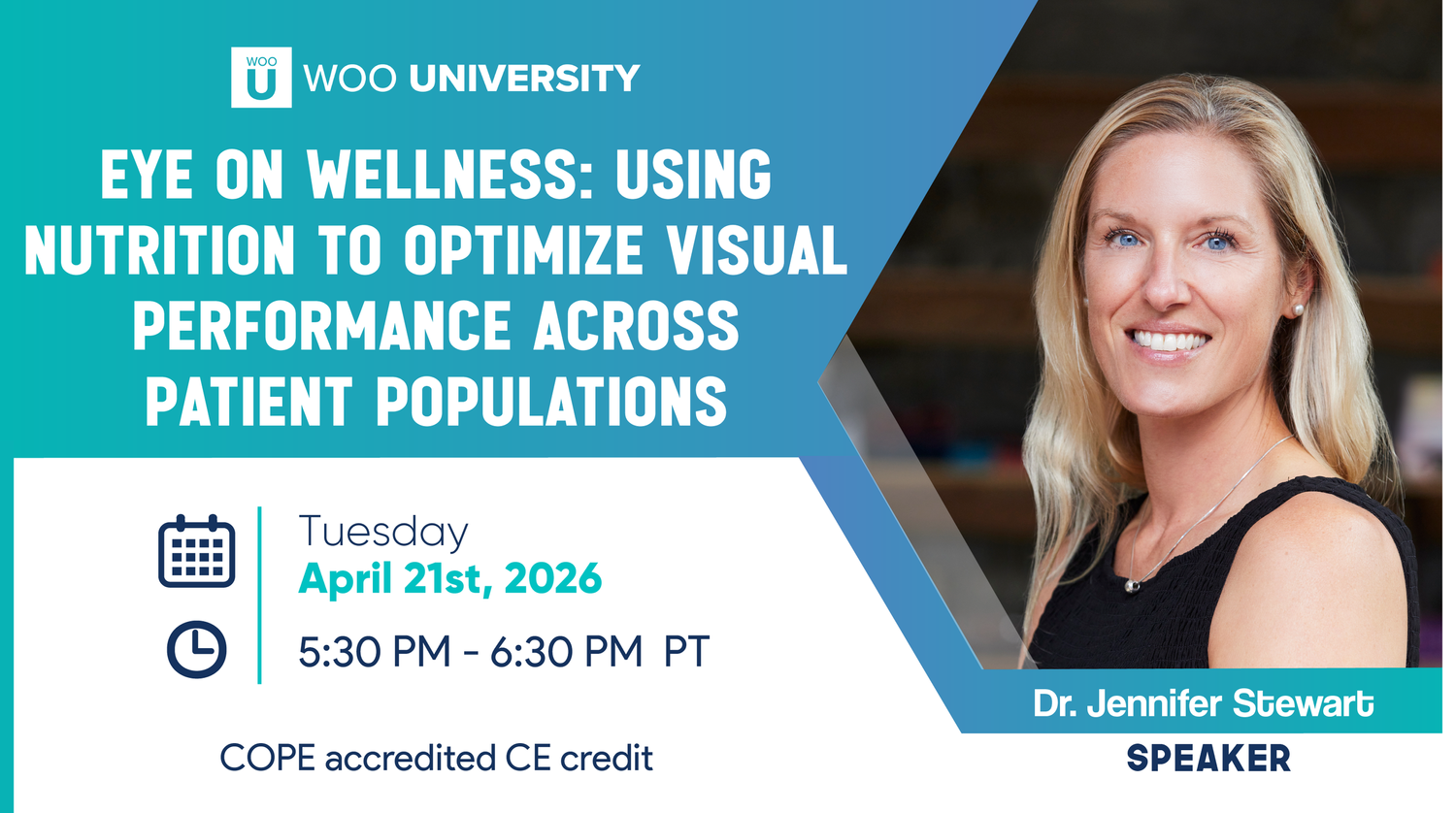
Eye on Wellness: Using Nutrition to Optimize Visual Performance Across Patient Populations

This webinar explored how optometrists can move beyond traditional refractive and disease-based care to incorporate nutrition, systemic health, and visual performance into everyday practice. Dr. Stewart highlighted the role of antioxidants in enhancing visual quality, discussed the growing impact of GLP-1 medications on ocular health, and emphasized the importance of considering hormonal and nutritional influences across a wide range of patients. The session ultimately focused on simple, practical strategies that can be easily implemented in clinic.
Looking Beyond the Basics: Key Insights for Modern Optometric Care
As optometry continues to evolve, so should the way we approach patient care. It’s no longer just about achieving 20/20 vision—there are deeper, often overlooked factors that significantly impact visual performance and ocular health. Below are key insights that can elevate everyday practice and patient outcomes.
We should be thinking beyond 20/20 vision:
Even patients with “perfect” acuity may struggle with contrast, glare, and visual quality. Targeted nutritional support, particularly with lutein, zeaxanthin, and mesozeaxanthin, can enhance visual performance in otherwise healthy patients.GLP-1 medications are reshaping patient care:
With the surge in medications like Ozempic and Wegovy, optometrists must be aware of associated refractive fluctuations, retinal considerations, and nutritional deficiencies. Many of these patients are not being counseled elsewhere, creating an important opportunity for us to step in.Nutrition is one of the most underutilized tools in optometry:
Patients are often not getting adequate antioxidants or omega-3s, especially when appetite is suppressed. Even brief conversations about diet and supplementation can significantly impact ocular health and visual function.Hormonal changes play a major role in ocular surface disease:
From pregnancy to menopause, hormonal shifts can lead to dryness, fluctuating vision, and contact lens intolerance. Proactively asking the right questions can uncover treatable issues that patients often assume are “normal.”Make it easy for patients to succeed:
Patients are far more likely to follow through when recommendations are simple and accessible. Providing products directly in-office removes barriers and improves outcomes.
Stay Ahead in Patient Care
As these trends continue to shape the future of optometry, staying informed and proactive is key to delivering the highest level of care. Small changes in how we educate, recommend, and support our patients can lead to meaningful improvements in both visual outcomes and overall patient satisfaction.
Ready to take your practice to the next level?
Join us for our upcoming continuing education (CE) sessions, where we dive deeper into these topics and provide practical strategies you can immediately apply in your clinic.
👉 Register now to secure your spot and stay at the forefront of modern optometric care.
